


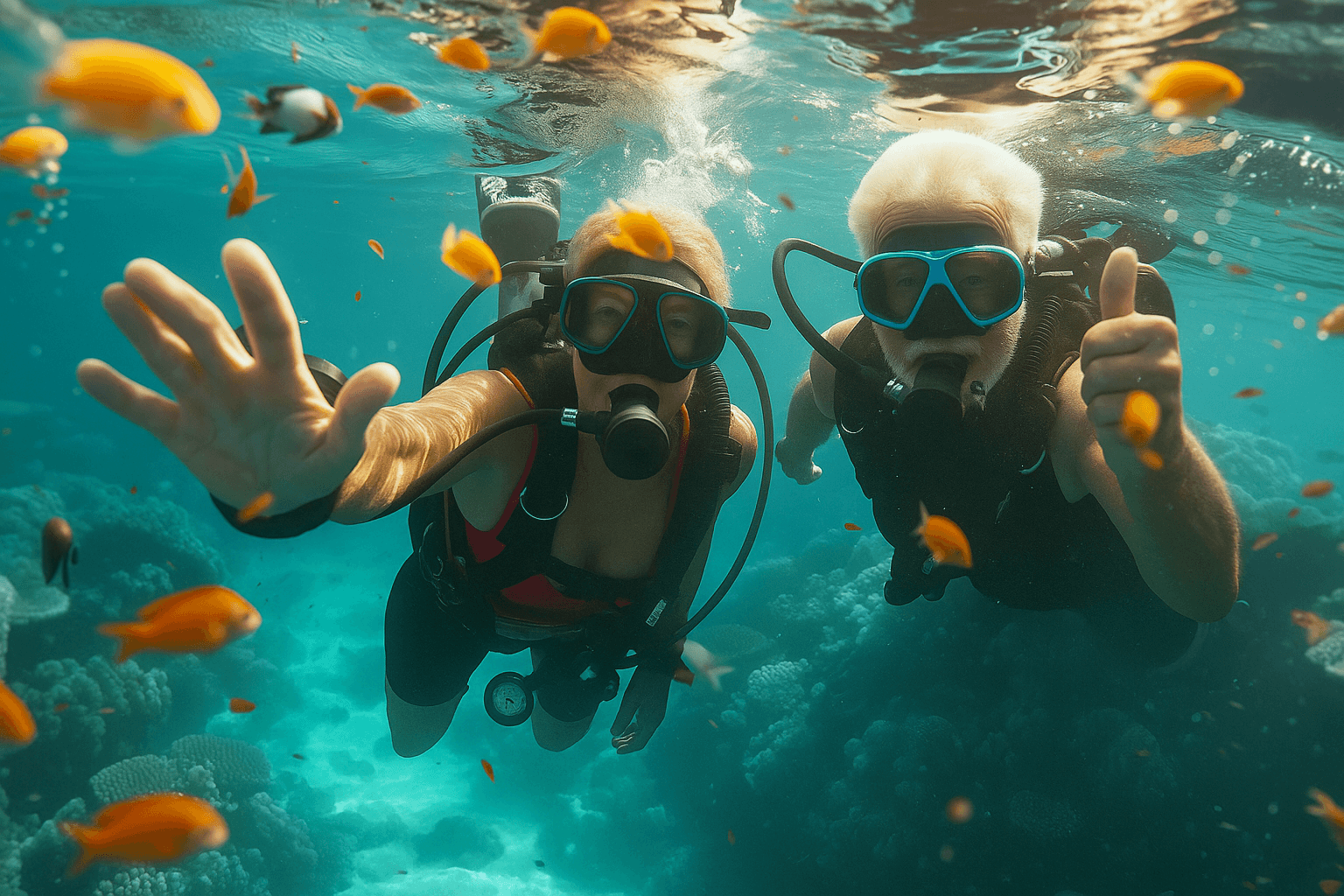
| 🤿 Growing Old in Diving – in style 🤿 I like to think of myself as a bit of a diving evangelist — I’ll happily help new divers, rusty divers, and those who haven’t worn a wetsuit since Moses parted the Red Sea. Doesn’t matter which training agency’s flag they salute under; once a diver, always a diver. There are countless reasons people drift away from diving, but let’s be honest — it’s usually about family or finances. Young families swallow time and money faster than a leaky inflator hose. Many dive-parents (myself included) are just counting the days until junior is old enough to get certified and join us underwater. That way, we can dive together — and I can finally stop feeling guilty about sneaking off to the quarry without them. But here’s the real question: when should we hang up our fins? At what point does diving just stop making sense, no matter how much we love it? It’s not easy to admit we’re getting older — slower to kit up, heavier to haul, and more fragile than we’d like to admit. The calendar doesn’t lie, and neither do our joints. After a long day of dives and training, I often laugh and say, “This is a young diver’s game.” It’s supposed to sound like a joke, but there’s usually a bit of genuine creaking behind the laughter. So, I’ve learned to pace myself — something that would’ve horrified my younger self. Nitrox has become my best buddy. It’s the magical blend that keeps me from feeling like I’ve been tumble-dried inside my drysuit. But really, it’s just me compensating for the slow inevitability of ageing fins. Recently, I had the honour (and challenge) of helping a once top-tier diver get back into the water after more than 15 years on dry land. The pool was our safe zone — a place to rediscover buoyancy and humility. Gear has evolved, techniques have shifted, but the biggest changes were physical and mental. It wasn’t about training a peer anymore; it was about keeping someone — and their potential buddies — safe. Working with returning divers has been an education. Those I’ve trained from scratch often have a healthy respect for risk and their own limits. But assisting a diver who used to be “the best of the best” can be nerve-wracking. They remember their skills through rose-tinted goggles — I see the dive plan through a risk assessment lens. Suddenly, I’m the bad guy limiting depth, buddies, and conditions… and reviving long-simmering branch politics that predate my first open water dive. So, here’s what I’ve learned. Don’t be dazzled by a diver’s war stories. Judge their current abilities, not their past certifications. Encourage refresher theory sessions — especially now that Nitrox is a basic kit, not black magic. One returning diver even called it the “Devil’s gas.” I call it “insurance for my creaky joints.” And then there’s the big one: knowing when to stop. Will I recognise when I hit my own limit? Will I be smart enough to step back before I become the one asking for “just one last dive”? I tell myself I’ll quit when I can’t carry my own cylinder… though, technically, we already help disabled divers with that. Maybe I’ll quit when my students start calling me “sir” unironically, or when it all just feels like too much heavy lifting — figuratively and literally. Recent incident reports hint that older divers may be facing higher risks. Maybe that’s our cue to bring back medicals for the over-60s. Perhaps that will be my marker too: if I can’t pass the professional diving medical anymore, I’ll finally hang up my fins and watch my kids take the torch — or rather, the dive light — forward. Until then, I’ll keep making bubbles while I can, sharing the joy (and the occasional backache) of the sport that’s shaped my life. – Au – |
Growing Old in Diving
-

- 11/11/2025
- 0 Comments

“Where the real power lies.”
The hammerhead shark’s distinctive “hammer” is just one of the many bizarre evolutionary ...
Emergency Management in Diving – What to Do When Things Go Wrong?
Scuba diving is a fascinating and safe sport – as long as you ...

Master Reef Guides
Guardians of the Great Barrier Reef’s Future Article by Jessica Cooke The Master ...